

 New 5G HUAWEI Pura 90s Series delivers a 200MP Ult...

 Sandisk expands Optimus lineup with two additions
 Next-Gen Gaming & Business Monitors Engineered by ...
Keeping infrastructure up and running is a challenge in a country as geographically spread out as South Africa. When equipment goes offline at a remote site, the problem isn't always complicated. Sometimes, all it takes to get a router, switch or other device working again is a reboot. But when this equipment is in Sutherland or Wupperthal, sending someone to the site to reboot the device can be a costly and time-consuming exercise.
The problem with downtime
Downtime affects service delivery, productivity and customer experience. If an ATM goes offline, customers lose access to cash and the bank bears the cost of resolving the fault. When communications systems at a remote transport hub fail, the entire supply chain is interrupted until someone can get there to resolve the problem. If a retailer's network equipment goes offline, payment terminals that rely on that connection can stop working, resulting in lost sales and frustrated shoppers. And when network equipment at a remote cell tower or base station stops responding, customers are likely to have trouble making calls, sending messages or accessing online services.
Across all these industries, the impact goes beyond the hassle of a call-out and the revenue lost in the meantime. Repeated or prolonged outages can damage a business’s reputation and drive customers to switch to a competitor that offers a more reliable service.
But have you tried turning it off and on again?
Metacom designed and developed the MC201 Intelligent Power Distribution Unit (PDU) specifically for one of South Africa’s biggest banks. Custom engineered in less than four months, the MC201 provides intelligent control over power to connected equipment, so that devices can be restarted remotely and in the correct sequence, reducing the need for physical intervention. It also offers API integration that connects with a business’s internal monitoring system to automate first line checks and fault handling.
For this client, last-mile connectivity failures were the biggest cause of ATM service call-outs. The bank uses multiple connections to keep its ATMs online, with fibre or microwave as the primary link, VSAT as a backup and GSM as a failover.
But when a connection failed for whatever reason, a technician would have to visit the ATM to fix the issue. This technician had to be accompanied by authorised personnel because of the sensitive nature of the infrastructure. The call-outs were not only costly, but also difficult to coordinate, as several parties had to be available at the same time to arrange access to the site. A single last-mile incident could take days to resolve, and while waiting, ATMs traded on the remaining last mile or, if none were available, on GSM. This carried an additional cost.
“When they approached us, they had pretty standard UPS equipment in place, but none of this solved the problem, and there was nothing available off-the-shelf to address this challenge,” says Marius Visser, Metacom’s CEO. According to him, the main source of the problem was how power was managed across the ATMs and their various network connections.
“When you’re dealing with such a wide variety of underlays and you have multiple devices from different providers on a specific site, when there's a power event, there’s a very real risk of devices becoming unresponsive. If this happens at an ATM in a remote, rural community on payday, there are people who depend on cash to buy groceries, pay for transport and cover their families’ basic needs; you can’t afford for systems to go offline.”
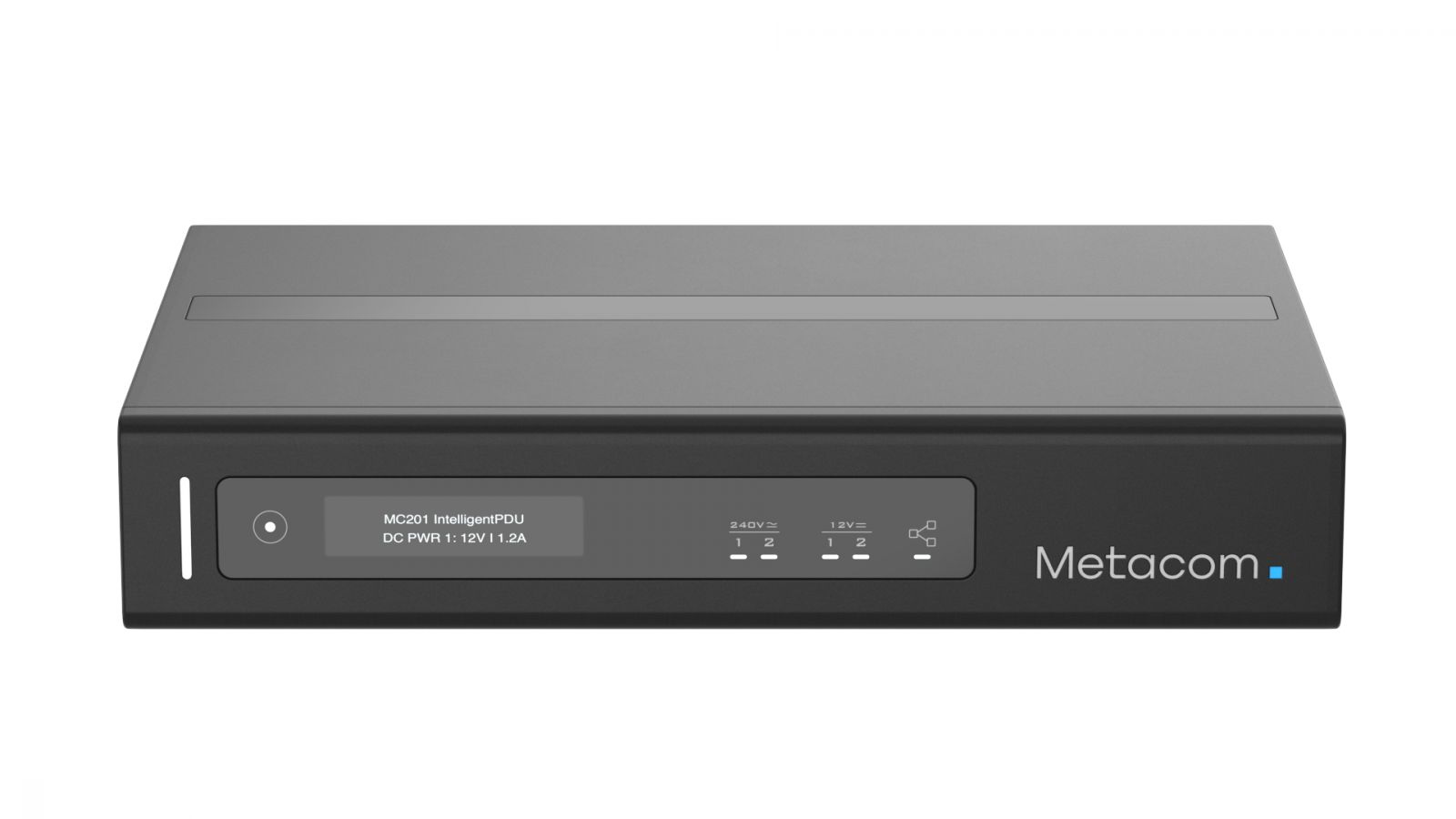
The MC201 enables last-mile devices at ATMs to be rebooted remotely and automatically, with no site visit required. “At its core, the MC201 does remotely what a technician would otherwise do on site: switch a device off at the plug and switch it back on again in the preferred sequence, through a programmed algorithm,” says Visser. To aid visibility, management and monitoring of the MC201 happens via the in-house-built Metacom portal (Metacom Online).
To date, the MC201 has been deployed to approximately 800 ATM sites for this client. Every fault used to start with a site visit, because first line checks could not be done remotely. The MC201 automated them. One in five faults is now resolved by the remote reboot alone, in a couple of minutes. The rest reach the provider with first line checks already complete, cutting several days off the resolution time.
The MC201 can also be adapted and enhanced as the client's needs evolve, adds Visser. “We’re already building the next version for the bank, which will be used to power and manage their branch network.”
While the principle behind the MC201 might be simple, the impact of the technology for this big South African bank has been significant, says Visser. But this solution can also add value for smaller businesses that need help managing just one or two remote sites more effectively. "Having seen these challenges first-hand across the South African market, we've made the MC201 available through MetaShop, our online sales portal, so businesses of any size and across any industry can easily purchase it and implement smarter remote power management at their sites,” he adds.
“For me, this solution showcases what's possible when you rethink how remote equipment is managed,” Visser concludes. “The MC201 is already delivering results for one of our big clients and we're confident it can help other businesses do the same. If you rely on equipment at remote sites, this is a smarter way to keep it running, reduce downtime and avoid costly failover and call-out costs.”
 Top 5 attractions at the 2013 Johannesburg International Motor Show
 Mad Max Stronghold trailer serves up a different kind of siege warfare
 Gaming News Roundup - The Future Beckons Edition
-2.jpg) eSports Unveiled Part 2 - A coach perspective on male and female pro gaming
 Samsung Galaxy S4 Zoom - white
 LG’s plan to take the smart home from the kitchen to the factory floor
 Logitech Pebble 2 Combo
 Audi's Traffic Lights tricks now also heading to Europe