The Big Issue - the right to internet access
By Johan Keyter 5 July 2011 | Categories: feature articles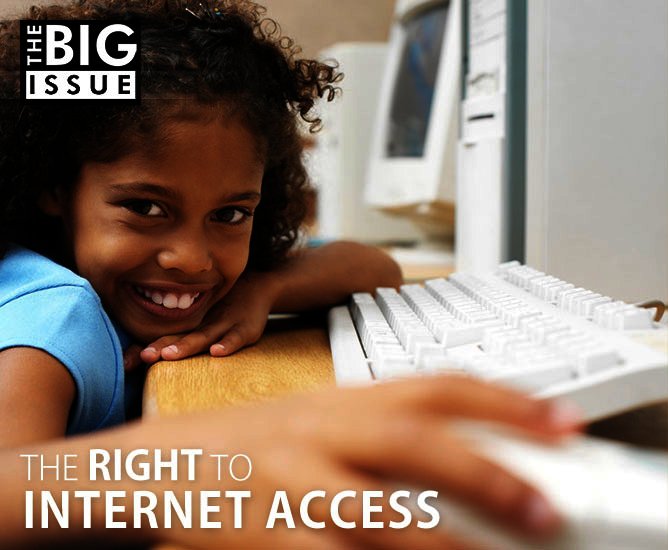
Last month the United Nations released a report which counts internet access as a human right, instead of a privilege.
 The UN report comes on the back of several internet-aided revolutions in the Middle East, as well as renewed outcries over state internet censorship in China and elsewhere. It's clear that the broad, near-instantaneous communication which the internet allows, is a very powerful tool in resisting oppressive regimes.
The report by UN Special Rapporteur Frank La Rue, underscores the, "unique and transformative nature of the Internet not only to enable individuals to exercise their right to freedom of opinion and expression, but also a range of other human rights, and to promote the progress of society as a whole."
It emphasised the ability of internet communications to aid the populace during times of unrest, to combat inequality and to accelerate the development of human progress. The report notes that in certain cases internet access needs to be limited, for example in the event of large scale cyber attacks. However, it argues that states often misuse this power to cut access for its own agendas, with La Rue saying governments should rather strive, "to make the Internet widely available, accessible and affordable to all."
While the UN unfortunately does not have the power to individually enforce this ruling, disconnecting people from the internet is now banned under international law. "In many instances, states restrict, control, manipulate and censor content disseminated via the Internet without any legal basis, or on the basis of broad and ambiguous laws, without justifying the purpose of such actions. [...S]uch actions are clearly incompatible with states' obligations under international human rights law, and often create a broader 'chilling effect' on the right to freedom of opinion and expression," the report said.
While most people can agree that internet access should be something everyone has a right to, the ruling clashes with certain countries who disconnect people from the internet for online piracy. France for example enforces this anti-piracy measure, something which the report considers to be in violation of international civil and political rights.
The issue is also affected by recent international hacking attacks, with some arguing that perpetrators must be stripped of their online rights, whether they be "hacktivists" or not. And while the report allows for the right to internet access, it unfortunately did not call for the right to affordable internet access.
Most Read Articles
 Logitech Pebble 2 Combo
 Samsung Galaxy S4 Zoom - white
 Quick Review: Tecno Spark10 5G
 Samsung Galaxy S4 Zoom (black)


Have Your Say
What new tech or developments are you most anticipating this year?