Inaugural HFA report warns of affordability crisis in medical schemes, stress need for innovative reform
By Staff Writer 3 September 2026 | Categories: feature articles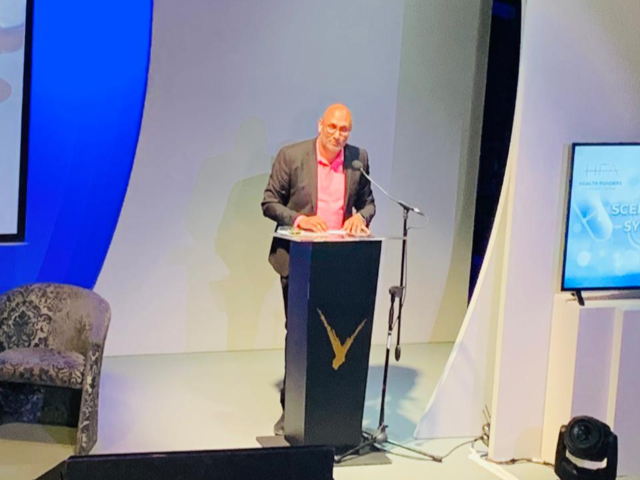
Related Articles
 Redefine positions R101.2 billion portfolio for gr...
 Forget the AI hype - South Africa’s real AI race...
 Outdoor Wi-Fi - The new customer engagement experi...
The Health Funders Association (HFA) recently launched its inaugural State of Medical Schemes Report (SOMS), bringing together the views of medical scheme leaders, new data illustrating the scale of protection provided by medical schemes, and modelling of reforms that could help strengthen the sector’s long-term sustainability.
The report was launched at HFA’s 2026 Scenario Planning Symposium at The Venue, Melrose Arch. The Symposium brings together leaders from healthcare and civil society to consider the future of medical schemes, health reform, artificial intelligence and emerging technologies, and innovation in healthcare delivery. Speakers include Dr Imtiaz Sooliman, Professor Roseanne Harris, John Letsoalo, Mark Heywood, Dr Mzulungile Theo Nodikida, Dr Dumisani Bomela, Dr Stavros Nicolaou, Dr Simon Strachan, Dr Zaheer Moolla and other healthcare leaders.
HFA CEO Thoneshan Naidoo said the purpose of SOMS is to provide an evidence-based view of both the contribution medical schemes make to South African healthcare and the pressures that could undermine their sustainability.
“The debate around medical schemes is understandably dominated by affordability and rising healthcare costs. These are serious challenges and we cannot shy away from them. But we also need to understand what medical scheme protection means in practice, what is putting that protection under pressure, and what reforms are needed to preserve and extend it.”
Beyond the numbers: what medical scheme protection means
One of the strongest messages emerging from SOMS is the scale of financial protection provided through risk pooling.
The Beyond the Numbers chapter draws on anonymised data supplied by four medical scheme administrators covering approximately 5.74 million beneficiaries equivalent to 62% of all medical scheme beneficiaries for the year ended 31 December 2025. It shows protection extending from newborn babies to people over the age of 100, and across oncology, rare diseases, complex hospital admissions and other high-cost healthcare needs.
Among the findings, the highest annual claims for a single beneficiary reached R20.7 million. At an assumed average contribution of R2,400 per month, it would take one member 717 years to contribute R20.7 million. Put differently, funding R20.7 million would require the combined monthly contributions of 8,607 members’ for 1 month, assuming that none of those members incurred claims of their own.
Administrators also reported 34,888 beneficiaries with claims exceeding R500,000, while almost one million beneficiaries (17% of surveyed beneficiaries) incurred healthcare costs that exceeded their annual contributions.
The analysis also identified 321 beneficiaries over the age of 100. Of these, 270 (84%) were women. The oldest beneficiary is a women aged 114, while the oldest male beneficiary is 106.
The data also shows that catastrophic healthcare costs were not confined to older people. High-cost claims occurred across every age group. One neonatal beneficiary incurred claims of R9.8 million, who spent 309 days in hospital. From the responses, we noted that 132,800 beneficiaries were receiving oncology treatment, with the claims of 265 beneficiaries exceeding R1million.
The 10 longest continuous hospital admissions reported ranged from 158 days to 381 days. The longest was 381 days for a 41-year beneficiary who had a parasitic brain infection called toxoplasma meningoencephalitis.
The highest medicine claims reported ranged from R4.5 million to R7.2 million and included treatments for rare conditions such as Hunter syndrome and Pompe disease.
Naidoo said these figures help explain the value of medical scheme cover beyond the benefits that an individual member may claim in a particular year. They also illustrate the careful balance that schemes must maintain when managing a finite pool of member contributions: funding interventions that can improve health outcomes across a broader population, while ensuring that resources remain available for members who may unexpectedly require extremely costly or prolonged care.
“At the heart of a medical scheme is a finite pool of funds that must meet very different healthcare needs. Schemes have to consider where those funds can deliver the greatest benefit across their membership, while ensuring that resources are there for the individual member who may suddenly need extremely costly or prolonged care. None of us knows when we may face cancer, a premature birth, a serious accident or a rare disease. That uncertainty is precisely why risk pooling matters. A member’s contribution does not simply fund the healthcare they use that month or year; it contributes to a shared pool that protects members when they face healthcare costs that very few households could afford on their own.”
The Voice of the Principal Officer: a resilient sector under pressure
SOMS also captures the perspectives of 28 medical scheme Principal Officers, providing insight into the pressures they see affecting membership, affordability, sustainability, regulation and innovation.
Their responses describe a sector that remains resilient and socially important, despite sustained affordability, demographic, cost and regulatory pressures. Twelve of the 28 respondents reported declining membership, while around four in ten reported increases in membership terminations, dependants being removed from cover and contribution payment difficulties. At the same time, Principal Officers pointed to prudent financial governance, effective benefit management, effective risk management and managed care as important factors supporting sustainability.
Their responses highlighted four dimensions of value provided by medical schemes. Medical schemes:
- enable timely access to quality healthcare;
- protect households against unpredictable and potentially catastrophic healthcare costs;
- relieve pressure on the constrained public health system; and
- contribute to a healthier, more productive society by supporting healthcare professionals and infrastructure, sustaining employment and helping people remain economically active.
Principal Officers were also clear that preserving and extending this value requires reform. Their priorities include modernising the Prescribed Minimum Benefit framework, enabling affordable low-cost benefit options, strengthening risk pooling, improving the regulation of provider costs and establishing a more coherent and predictable regulatory framework.
“There is a difficult tension at the heart of the sector,” said Naidoo. “People value the protection that medical schemes provide, but that protection has to remain affordable. If affordability deteriorates, members leave or reduce their cover. That weakens the risk pool and ultimately places even more pressure on those who remain.”
“Principal Officers are not calling for the status quo to be preserved. They are calling for coherent reform that protects the value medical schemes provide while making cover more affordable, sustainable and accessible.”
What if? Completing the reform architecture
The third major component of SOMS asks what could happen if South Africa implemented two reforms that have long formed part of the intended medical scheme regulatory architecture: risk equalisation and mandatory membership.
The report co-authored with Insight Actuaries finds that medical scheme membership has remained broadly stagnant over the past decade while the covered population has aged. The average beneficiary age increased from 31.7 years in 2005 to 34.5 years in 2024, while the pensioner ratio increased from 6.4% to 10%.
In a community-rated system, members cannot be charged more because they are older or less healthy. However, without risk equalisation, schemes with older and higher-risk populations carry higher predictable costs. This can create incentives to compete for lower-risk members rather than competing primarily on efficiency, quality, care management and value.
The SOMS modelling estimates that a Risk Equalisation Framework (REF) could redistribute approximately R5.9 billion annually between schemes to compensate for predictable demographic risk. This would ‘level the playing field’ by redistributing existing funding between schemes.
“The objective should be a medical scheme environment in which schemes compete on the factors they can control namely service, efficiency, purchasing, quality, care management and value, rather than on their ability to attract favourable risks.”
Mandatory membership addresses a different problem: younger and healthier people who can afford cover may remain outside the system until they anticipate needing healthcare. Broadening participation could therefore strengthen the overall risk pool and reduce adverse selection.
The analysis suggests that extending mandatory membership to employed people earning above the income tax threshold could potentially add 8.79 million people to the modelled risk pool and reduce average expected PMB risk cost by approximately 13%. Extending participation to all employed people produces a modelled reduction of approximately 18%. A separate restricted-scheme proxy indicates that the effect of broader and more stable participation could potentially be as high as 30%, although this should be treated as an indicative upper estimate. The report stresses, however, that mandatory participation would need to be accompanied by affordability measures and affordable benefit options.
“Risk equalisation and mandatory cover solve different parts of the same problem,” Naidoo said. “Risk equalisation compensates schemes for predictable differences in risk and allows them to compete more fairly, but it does not reduce the average expected PMB cost across the system. Wider participation can improve the overall risk profile by bringing more people, including younger and lower-risk people, into the pool. But this cannot be considered without first addressing affordability.”
The SOMS analysis concludes that mandatory participation, risk equalisation and affordability measures would work best as a carefully sequenced, integrated package, helping to create a broader and more stable risk pool while supporting fairer competition between schemes.
Looking beyond the immediate challenges
These themes form part of the wider conversation at the HFA Scenario Planning Symposium. The sessions examine the factors undermining medical scheme sustainability; critical interventions required for health reform; the implications of AI and emerging technologies; and new approaches to healthcare delivery.
Naidoo said the intention is not simply to identify the problems confronting the sector, but to encourage a more constructive discussion about its future.
“South Africa needs to expand access to quality healthcare, not allow existing access to erode. Medical schemes provide timely access to care, protect households against financial shocks, relieve pressure on the public health system and contribute to a healthier, more productive society. The challenge before us is to preserve that value while making medical scheme protection more affordable, more sustainable and more accessible to more South Africans.”
Most Read Articles
 Redefine positions R101.2 billion portfolio for growth in a world shaped by stru...
 Inaugural HFA report warns of affordability crisis in medical schemes, stress ne...
 E-commerce in South Africa crosses 10% of national retail turnover
 Iomega ScreenPlay TV Link Director
 Logitech Pebble 2 Combo
 Samsung Galaxy S4 Zoom - white
 Quick Review: Tecno Spark10 5G
.jpeg) Beware of deepfakes in the AI age, warns Kaspersky
Beware of deepfakes in the AI age, warns Kaspersky


Have Your Say
What new tech or developments are you most anticipating this year?