Turning the Tide - How IBM’s open-source AI is transforming climate disaster management
By Ryan Noik 28 November 2025 | Categories: Corporate Events
Related Articles
 SAS Executive Insurance Roundtable Tackles Disrupt...
 Equiano cable landing: Greater internet access - a...
 Cisco Live 2022: New Innovations Fuel the Modern E...
AI has dominated headlines this year, and mostly with good reason. But at its recent media event in Zurich, IBM Research shone a light on the real importance of AI, which is in its application, and how it is enabling data to be used in even more significant and meaningful ways.
A prime example of this was one of the big announcements at the event. There, together with the European Space Agency (ESA), IBM Research unveiled that they are open sourcing a pair of AI models that are being deployed to analyze extreme floods and wildfires.
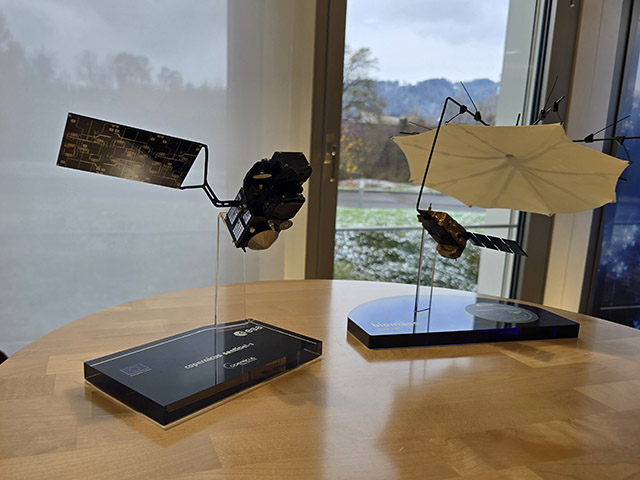
These are now being captured in a newly unveiled, global and multi-modal dataset called ImpactMesh. What makes ImpactMesh unique is that it shows before-and-after snapshots of flooded or fire-scorched areas, using Copernicus Sentinel-1 and Sentinel-2 Earth-orbiting satellites. This provides a better picture of landscape-level changes and gets around the problem of storm clouds and smoky fires obscuring optical sensors from accurately showing the severity of the climate event.
Unfortunately, ImpactMesh is sorely needed, with wildfires and floods causing massive damage across the planet. Just one example of the new dataset in action was the record-setting wildfires across Bolivia last year, which scorched an area the size of Greece, displaced thousands of people and led to widespread loss of crops and livestock.
To demonstrate its potential, IBM and ESA researchers used the dataset to customize their pre-trained TerraMind model for wildfire analysis. In early experiments, they found that the before-and-after optical and radar images of each event helped the tuned model produce burn scar maps at least 5% more accurate than maps produced by models trained on single optical images.
IBM Research explained that AI models trained on ImpactMesh could be used for a range of applications, from planning the immediate response after a disaster to assessing the damage and figuring out where (and where not) to rebuild. The dataset’s unique pre- and post-disaster coverage could also be useful in drawing up more accurate risk maps.
“Our goal is to empower researchers and responders to harness Earth observation data for faster, more accurate disaster mapping,” said Giuseppe Borghi, head of the ESA’s Φ-lab division. “This is a step toward building resilience in the face of a changing planet.”

IBM and ESA's ImpactMesh dataset is the first global multi-modal, multi-temporal collection of images covering extreme floods and wildfires over the last decade.
Beyond that, why is using datasets in new ways so valuable now? After all, we have had data and analytics for years. IBM Research explained that what has changed is the frequency and severity of climate events, with floods and wildfires together accounting for nearly half of natural disasters recorded in the last decade, and noting that evidence suggests these events are becoming more severe as Earth’s climate gets hotter.
Another example of the new models in action was IBM and ESA's fine-tuned TerraMind model, which was able to identify flooded areas in Queensland, Australia in 2022 by drawing on radar imagery included in the TerraMesh dataset.
The ImpactMesh dataset and customized TerraMind models are part of an ongoing collaboration between IBM and ESA. In April, researchers released their multi-modal TerraMind model, which at the time outperformed a dozen other geospatial models on common mapping tasks on the community benchmark, PANGAEA.
The company explained that this work is ongoing at IBM Research, with the aim of developing open-source, industry-leading AI models, tools, and benchmarks to study our planet.
“ImpactMesh could set a new standard for applying geospatial AI to natural disasters,” said Juan Bernabe-Moreno, director of IBM Research Europe, Ireland, and UK. “Through advanced model architectures, rich Earth observation data, and open collaboration, we can improve our preparedness and response to extreme events.”
This, however, is not for someday in the near or distant future. Bernabe-Moreno noted that it is already happening. Nor, he said, is it only being used in European countries, but rather is being made available worldwide. ‘’Already we have collaborated with the South African government, as well as other African countries, like Kenya and Niarobi,’’ he added. He revealed that after the May 2024 floods, they worked with the South African government and the data was used to analyse the impact of landslides, given the elevated area.’’It was a bespoke reaction but also a rapid one, but the partnerships are already in place with countries in Africa,’’ he stressed.
This is imperative for the continent. As noted by the World Meteorological Organization, Africa is most severely affected by climate change, and developing nations often not have the infrastructure in place to handle extreme, and unexpected weather events.
In addition to ImpactMesh, IBM and ESA also announced the release of TerraKit, an open-source package that makes it easier to build geospatial datasets and tune AI models on the most up-to-date information. TerraKit can be used to expand on ImpactMesh’s collection of curated flood and wildfire data, or to create a new dataset from scratch.
The announcement was both sombre and hopeful. Sombre in that it was a reminder that climate change is here and causing significant changes on the earth and to people’s life on the planet, and hopeful in that it reminded that with AI, and quantum computing becoming more of a reality, we do have tools to respond to the climate changes that are happening.
Most Read Articles
 Edimax 3G Broadband Router and Print Server
 Blue Coral Galaxy S7 edge coming to South Africa
 McDonalds scam ropes in internet users
 Why Enterprise Storage Matters to South African Businesses
 New Canva partnership brings local implementation and training to Africa Inbox
 Trust is the infrastructure South Africa’s AI economy will run on
 Logitech Pebble 2 Combo
 Samsung Galaxy S4 Zoom - white


Have Your Say
What new tech or developments are you most anticipating this year?