How good IT decisions can transform SA businesses
By Industry Contributor 17 February 2026 | Categories: feature articles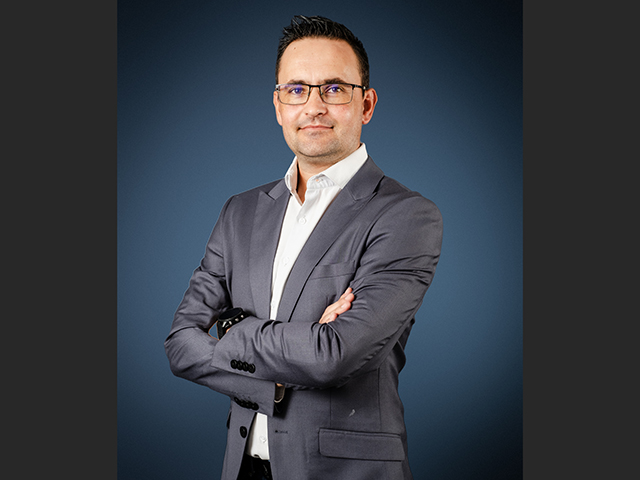
Related Articles
 AI agents can now act - Who is accountable when t...
 AI should not make leaders think less. It should e...
 Why emerging telecoms giants need to build an incl...
By Werner Joubert, Commercial SYS Business Director (South Africa & SADC) at ASUS
For many companies, 2026 is all about upgrades. As digital tech becomes more critical for day-to-day operations, the pressure’s on to modernise organisations and equip workforces with the technologies and the hardware they need to work, grow, and succeed.
South Africa is on the same trajectory as the rest of the world – transitioning from traditional PC hardware to cloud-enabled devices and services – but it is also subject to the same challenges. Concerns surrounding the escalating price of memory and storage, as well as the prevalence of cloud-based technologies, are valid and should prompt local enterprises to rethink the value and efficacy of the investments they make today.
However, uncertainty doesn’t have to give way to indecisiveness. With the right strategy and knowing what technology solutions they need, companies can build and execute an IT strategy that not just puts them on solid ground, but also future-proofs their organisations and lock in long-term value.
Know your present requirements for future IT decisions
If there’s one truth to enterprise IT, it’s that the “one-size-fits-all” approach no longer works. IT, and especially IT procurement, has embraced a hardware model that prioritises purpose-built devices that align more closely with business use cases and user profiles.
Key to that new approach is looking beyond general specifications. Case in point, businesses in South Africa should audit the computational demands of different teams and roles. An office worker is not going to need the same high-performance, high-capacity device that a systems engineer needs, nor do they need a device that offers the degree of portability or durability that a company executive requires.
Companies should consider PCs with modular designs and AI-integrated chipsets, as those factors can lead to employees managing and fulfilling tasks more efficiently, as well as overall extend the lifecycle of devices. Good hardware enables companies to focus on output rather than troubleshooting. Furthermore, by knowing their technical requirements, both present and future, companies can make investments in hardware now and bypass any potential shortages and price increases that may arise in the future.
Reach for the cloud
A mistake that many organisations make, one that’s understandable, is assuming that a full move to the cloud is inevitable. According to Gartner, worldwide IT spending is forecasted to grow by 10% in 2026, with demand from hyperscale cloud providers driving investment in servers optimised for AI workloads. At the same time, the growth of spending on devices – PCs, tablets and mobile phones – is expected to slow, largely thanks to rising memory prices. Migrating to cloud-based services and infrastructure not only helps to mitigate issues at the lower end of the market, but also offers significant benefits such as increased business agility and scalability, optimised costing, and guaranteed system uptime.
That said, cloud adoption does not negate companies’ needs for hardware that meets their on-premise needs and offers technical specifications and features that support and complement cloud solutions. Employees still require devices that offer sufficient processing power and storage capacities. Case in point, we are witness to the age of AI PCs, which are purpose-built to handle AI workflows and provide users with the performance and productivity capabilities.
In short, it’s not a case of one or the other, on-premise or up in the cloud. Successful IT strategies are ones that use both and leverage the best of both worlds to transform their operations and employees’ experiences.
Building business resilience
At the end of the day, the outcome of any IT decision should help to build resilience levels and to equip organisations with the tools they need to operate and grow. What hardware to use should be based on the questions, “how does this power my business?” and “how does this add value to my business?”, rather than investing in stop-gap solutions or tech that just responds to whatever is trendy that day.
When investing in devices, South African companies should prioritise devices and services that are not just durable, reliable and built for specific use cases, but also that drive meaningful change in their organisations. The age of AI is upon us, so many will be prompted to invest in computational power now. But what’s important is planning for the future.
By working with vendors who can guarantee product availability and pricing, thereby enabling optimised IT spending, and with the help of the right IT strategy, companies can enhance their operations, unlock new efficiencies, and transform their organisations through the use of state-of-the-art hardware and cloud-based solutions.
Most Read Articles
 TechSmart Gigabyte Sci-Fi Short Story Comp: RoBokkie
 Samsung may reveal Galaxy Note 8 on 23 August
 Six Top Tips for using Ordinary Binoculars for Stargazing
 Bungie offers glimpse at Destiny weapons for The Taken King
 AI investment needs a more informed boardroom
 Cyber risk begins long before an attack
 Governing AI in African markets: from principles to practice
 Your backups may survive while stolen credentials keep attackers inside


Have Your Say
What new tech or developments are you most anticipating this year?