Reputation at Risk - Why brands no longer control their own story, and what they can do about it
By Ryan Noik 14 April 2026 | Categories: feature articles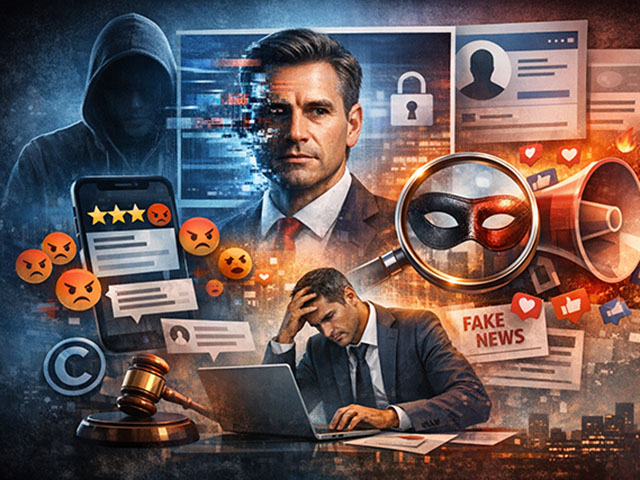
Related Articles
 The AI-native competitor is coming, and your bigge...
 Can flexibility and ingenuity rewrite the economi...
 MyAgent and the Rise of Ambient Intelligence - Cis...
By Ryan Noik
Recently law firm Adams and Adams unpacked an issue that isn't addressed enough: managing ones online reputation in the creator economy. At its recent annual Crammer event, the firm addressed the unique risks and challenges that are emerging now, and offered some guidance as to how to deal with them.
Melissa Morris, the senior associate trade mark attorney, noted that reputation is no longer something businesses control. It is something they experience often in real time, and often without warning.
She cited several examples of this, from a misleading video that goes viral overnight and one‑star reviews appear in waves from people who have never used your service to an account impersonating your CEO or brand quietly gaining traction, scamming customers who believe it is legitimate.
And here is the disturbing part - each of these are real scenarios that are taking place. The problem for a business is that by the time the CEO or marketing team turn on their laptop, the narrative has already formed, and the business is left reacting, perhaps reeling.
Morris explained that this reputational reality is being faced by organisations due to today’s global creator economy, where content moves faster than corporate response cycles and stories, whether real or manufactured, carries immense influence.
What hasn't been explained to this degree is how identity, reputation and intellectual property are colliding in an age of decentralised influence, AI‑generated content and blurred boundaries between truth and appearance.
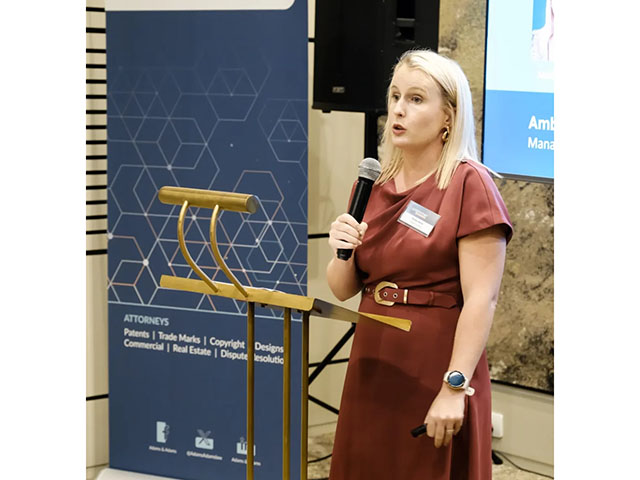
Melissa Morris
The Creator Economy has rewritten the rules
Once considered fringe, the creator economy is now one of the most powerful forces shaping public perception. Hundreds of millions of individuals, including micro‑influencers, reviewers, commentators, podcasters and anonymous creators, produce content that audiences increasingly trust more than traditional advertising, and in some markets, turn to rather than mainstream media.
These creators act like broadcasters, but without editorial checks and balances, and without the gatekeepers that were proofreaders and sub-editors. A single 10‑second clip, review or reaction video can now reshape a brand narrative within hours.
Morris pointed out that the critical shift is that increasingly reputation is no longer driven by what a company says about itself, but by what everyone else says about it. As a result, reputation has evolved from a “soft” concept to a measurable business asset that directly affects trust, investor confidence, employee engagement and brand value.
The risk is amplified by platform algorithms that reward emotional, dramatic content, often manufactured anger. As well, outrage, whether with genuine cause or not, spreads faster than corrections. And once misinformation gains momentum, the truth struggles to catch up.
From Ambush marketing to Ambush identity
Morris explained that traditionally, businesses worried about ambush marketing where brands hijacked attention during major events. Today’s threat is more personal and far more destabilising: ambush identity.
She explained that ambush identity occurs when a brand’s name, visual elements, tone, executive likeness or reputation is hijacked, sometimes maliciously, sometimes through confusion or trend‑driven content—and used to shape public perception without the brand’s consent.
This may take a variety of forms, including:
- Fake social media profiles impersonating a company or senior executive
- Deepfake videos or AI‑generated voice clones
- Review bombing campaigns triggered by unrelated events
- Out‑of‑context clips edited to misrepresent statements
- False endorsements used to sell products or promote scams
Often, the damage occurs even when there is no malicious intent. Chaos, misunderstanding and algorithmic amplification are enough.
A widely cited example involved a local restaurant inundated with hostile reviews after a criminal arrest occurred on its premises, despite the fact that the business had no connection to the crime. The rating collapsed overnight, and real customers were left questioning the brand’s credibility.
Why AI makes the problem worse
Exacerbating matters is Artificial intelligence, which has added an entirely new dimension to reputational risk.
Deepfakes, once novelty curiosities, are now sufficiently realistic to deceive sophisticated audiences. AI tools can replicate voices, faces, mannerisms and writing styles with alarming accuracy. A fake video or audio clip no longer needs to be crude to be effective; it only needs to be brief, emotive and shareable.
At the same time, Morris stressed, AI is increasingly used legitimately: for branding, content creation, design inspiration, and market analysis. But these efficiencies come with hidden legal and reputational risks, particularly when creators or service providers fail to understand how AI tools generate outputs or where underlying data comes from, she explained.
Crucially, and one of the questions that arose after Morris'presentation “AI did it” is not a defence. She explained that the law does not excuse infringement or misrepresentation simply because a machine assisted in its creation.
Identity is now Intellectual Property
One of the clearest takeaways from the session was that organisations must reframe identity as intellectual property.
This means that the game has changed, and a company’s identity is no longer limited to logos and brand names. It includes slogans, sound marks, visual styles, executive personas, distinctive communication patterns and even widely associated catchphrases.
These elements carry commercial value, she stressed, and they can, and should, be protected.
Trademarks, copyright and personality rights are no longer abstract legal tools reserved for those in the legal world and met with a yawn by those not..
She noted that they are among the fastest and most effective mechanisms for enforcing takedowns, removing impersonation accounts and stopping misleading content on major platforms.
Morris noted that platforms respond more quickly to rights‑based complaints than to emotional appeals. Being “upset” rarely moves the needle; but being able to demonstrate enforceable rights does.
A well‑known example discussed was actor Matthew McConaughey’s registration of his iconic catchphrase, “Alright, alright, alright.” By trademarking something intrinsically tied to his identity, he gained three things: control over use, authenticity in licensing, and reputational protection against misuse on low‑quality or misleading merchandise.
The lesson for businesses is clear: if something has become recognisably associated with your brand, it is worth considering whether it should be protected.
Monitoring is now essential
Another of the insights offered in the session is that silence is not neutrality, it is vulnerability.
Effective reputation management now requires continuous monitoring, including using the likes of social listening tools; alerts for brand names, executives and similar account handles; review‑monitoring dashboards; impersonation‑detection servicesas well as image, face and voice‑usage tracking tools.
These systems allow businesses to detect problems early, before narratives solidify and spread.
Morris continued that just as importantly, organisations need a rapid response framework. When a reputational crisis hits, there is no time to debate process or roles. Pre‑drafted statements, evidence‑collection protocols, internal escalation chains and platform‑specific takedown routes should already be in place.
This is one of those scenarios that matches the cliché - the right moment to respond online was five minutes ago.
The Legal answer
So what can businesses do? The Adams and Adams team answered this question by noting that despite the speed of online harm, legal tools remain highly effective, when paired with swift action.
Trademark rights enable fast removal of impersonator accounts, fake websites and false endorsements. Copyright can be used to tackle unauthorised reposting, deepfake videos and manipulated content. Personality rights offer protection against the misuse of likeness, voice and identity, even in AI‑generated form.
The key is preparedness. Rights secured in advance are infinitely more powerful than rights asserted belatedly.
Regulation may lag, Responsibility does not
A recurring question raised after the presentation was whether the law can keep up with AI’s rapid evolution. The consensus: regulation will always lag behind innovation.
Global jurisprudence is developing unevenly, with some jurisdictions favouring AI providers and others prioritising rights holders. Appeals, uncertainty and divergence are inevitable. Waiting for perfect legal clarity is therefore not a viable strategy.
Instead, Morris encouraged businesses to focus on governance, transparency and risk mitigation. These could include contractual disclosures, internal AI policies, clear approval processes, and honest engagement with service providers about how content is created.
It appears that the bottom line is that trust is built through disclosure and honesty, not denial.
The New reality of reputation
What I took away from the event was that in the creator economy, authenticity is both the most powerful currency and the most dangerous illusion. And reputation is no longer something to manage after the fact. It is something to design, protect and defend proactively, strategically and legally.
Because in a world where anyone can speak for you, ownership of identity has become essential. This is where, from my perspective, having a good PR team skilled in crisis management and that have solid relationships with media professionals and a legal team on standby if needed, is more important than ever.
It also offered a stark reminder that in the digital and creator economy, for better or for worse, (and probably for both) your brand’s story will be told, with or without you. The question is whether organisations have the tools, rights and readiness to influence it when it matters most.
Enjoyed this? Don’t stop here.
I explore the human side of AI, technology, and the future of income in a way that’s actually useful.
For a deeper, more personal look at what doesn’t make it into the article:
👉 Join me on Substack (for deep dives)
👉 Join my WhatsApp Group (for real conversations)
Most Read Articles
 Acer launches Googlebook 14 in new flagship category featuring built-in Gemini A...
 Evolving your backup strategy is the key to surviving data evolution
 The security impact of digital innovation
 Toward an effective, accessible and affordable healthcare system in South Africa...
-2.jpg) The AI notetaker has become a corporate liability
The AI notetaker has become a corporate liability Samsung Galaxy S4 Zoom - white
 Logitech Pebble 2 Combo


Have Your Say
What new tech or developments are you most anticipating this year?